Every Breath Matters.
The Problem
Respiratory assessment in young children is still too subjective.
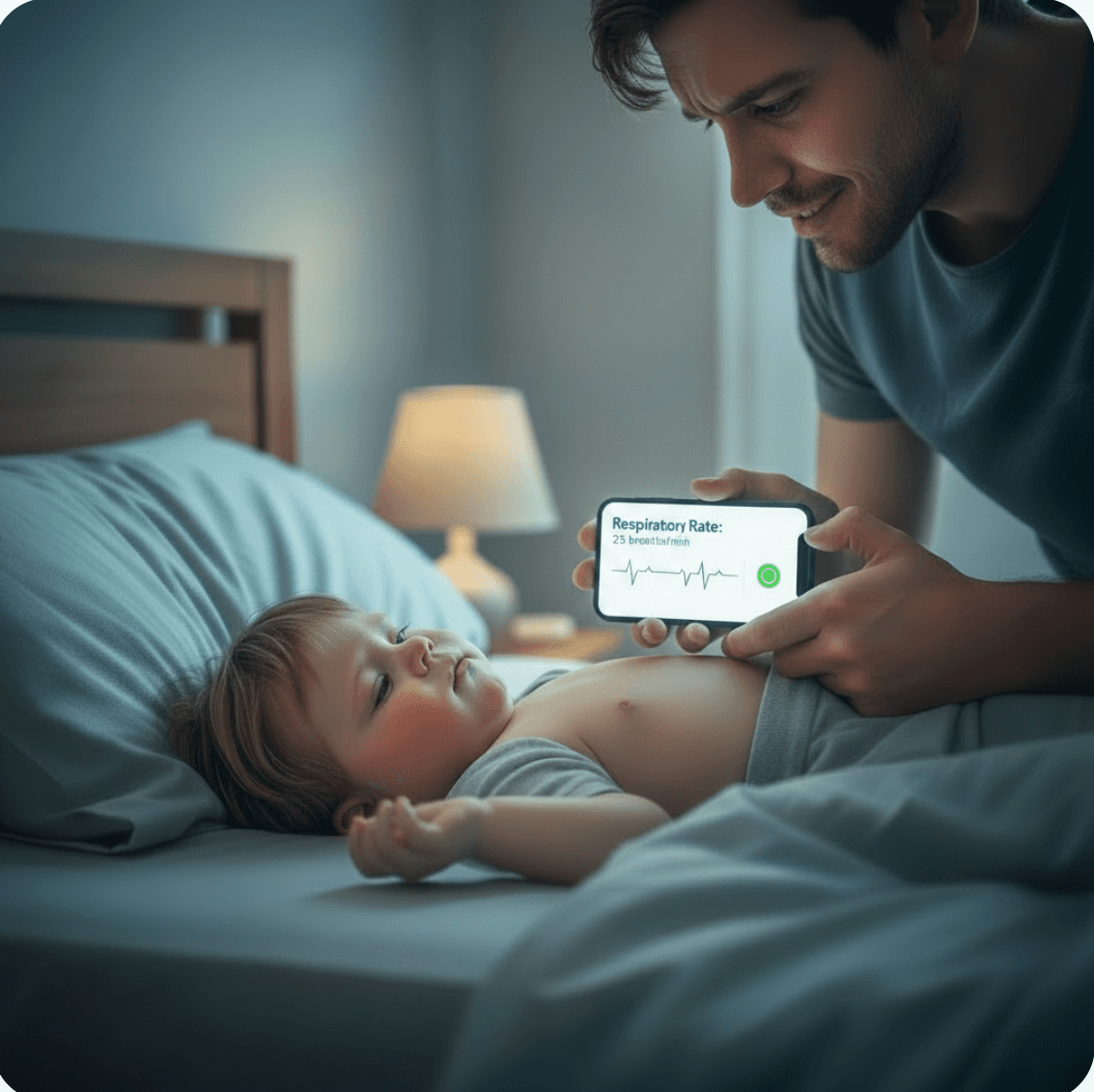
It's the middle of the night. A father watches his young child cough and work hard to breathe, and wonders: is this serious enough for the ER, or will it pass by morning? There is no simple, objective way for him — or for the clinician he might call — to know.
Children under five are among the hardest patients to evaluate during respiratory illness. Conventional lung function tests are rarely practical at this age, so caregivers and clinicians often rely on observation alone — at home, in primary care, and in resource-limited settings.
The result is a persistent detection gap:
- Delayed recognition of deterioration
- Unnecessary emergency visits and referrals
- Missed opportunities for earlier intervention
- Inconsistent assessment across providers and settings

The Solution
A 30-second video. Actionable respiratory insight.
BREASY uses smartphone video analysis to assess breathing motion patterns from the chest and abdomen and generate objective respiratory decision-support outputs.
Device-free
No extra hardware required
Non-contact
No sensors attached to the child
Fast
Brief capture during routine care or home monitoring
Accessible
Designed for real-world use, including low-resource settings
Privacy-minded
Video capture without identifying details, following privacy and data-security guidance
How It Works
Three steps to objective respiratory insight.
Record
Capture a short smartphone video of the child's chest and abdominal breathing.
Analyze
BREASY analyzes respiratory motion patterns and derives objective indicators of respiratory status.
Support Decision-Making
The platform presents clinically interpretable outputs that help identify children who may require escalation, closer monitoring, or urgent evaluation.
See BREASY in Action
Watch standardized capture and automated analysis.
Use Cases
Built for the moments when objective respiratory assessment matters most.
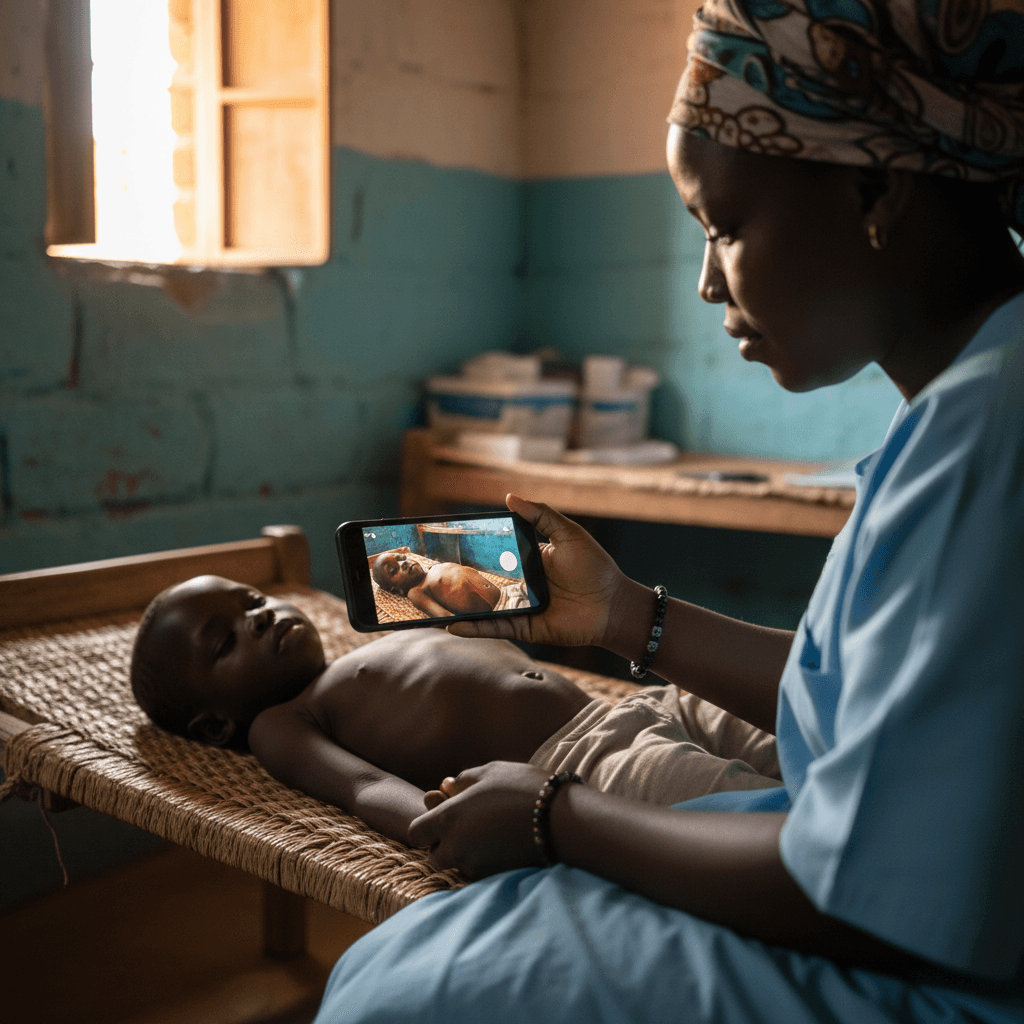
AI-Enabled Respiratory Triage in Low-Resource Settings
BREASY is being developed with a clear global health mandate — to bring objective respiratory assessment to frontline providers and caregivers in LMIC settings, where access to specialist care and diagnostic tools is limited.
Local partnerships are in place in the DRC (Democratic Republic of Congo), supporting planned implementation alongside community health workers and frontline clinicians.
Home Monitoring
Supports families and clinicians when respiratory symptoms begin or worsen, helping reduce guesswork and improve communication.
Pediatric Asthma & Wheeze
Particularly relevant for preschool children, where objective monitoring options are limited and early recognition of deterioration is critical.
Frontline & Primary Care
Supports more standardized respiratory assessment during routine clinical evaluation.
Global Health & Pneumonia Triage
Designed with future application in low-resource settings, where early identification of respiratory distress may improve triage and referral decisions.
Precision Medicine Monitoring
Objective at-home tracking of respiratory function to support gene therapy in spinal muscular atrophy (SMA) and Duchenne muscular dystrophy (DMD), where breathing is a key outcome.
Why BREASY
Better outcomes for everyone in the chain of care.
For children
A child-friendly, contactless approach suited to infants and preschool children.
For caregivers
More clarity, less guesswork, and better communication with clinicians.
For clinicians
Objective respiratory information to support assessment and follow-up.
For health systems
Potential to reduce unnecessary emergency-room visits and hospitalizations, improve triage, and lower the cost of avoidable utilization.
Clinical & Scientific Foundation
Built on clinical insight. Designed for real-world validation.
BREASY is being developed on the basis of clinical respiratory research, computer vision methods, and prospective pediatric datasets.
Peer-Reviewed
Proof of Concept — Cureus 2025
Evidence-generation activities include:
Peer-reviewed proof-of-concept published in Cureus (DOI: 10.7759/cureus.77297), demonstrating extraction of meaningful respiratory motion signals from video.
Read PublicationMulticenter pediatric datasets from Israel and Canada supporting ongoing validation.
Ethical approvals in place to support large-scale prospective data collection (>30,000 children), enabling global and LMIC recruitment.
Local partnerships in the DRC supporting planned implementation in low-resource settings.
View Letter of SupportOngoing development of broader validation infrastructure for diverse populations and settings.
Intended Use & Safety
Designed as decision support —
not autonomous diagnosis.
BREASY is intended to support respiratory assessment and triage-related decision-making. It is not intended to replace clinician judgment, emergency evaluation, or standard-of-care assessment.
Any final clinical decision, referral, or treatment action remains the responsibility of the healthcare professional.
For parents & caregivers
If a child appears severely unwell or in respiratory distress, seek urgent medical care immediately.
Regulatory Status
BREASY is currently under development. It is not cleared, approved, or authorized as a medical device by the U.S. FDA, Health Canada, the EU CE process, the Israeli Ministry of Health, or any other regulatory authority. Product availability and indications for use may vary by jurisdiction.
Global Vision
From the home to the clinic to low-resource frontline care.
~1 million
children under five die from pneumonia every year — the single leading cause of death in this age group, overwhelmingly in low-resource settings.
BREASY is being developed to support respiratory decision-making across multiple care environments:
Families managing symptoms at home
Pediatric clinicians monitoring young children
Frontline providers in settings where objective respiratory tools are limited
Our long-term vision is to make objective respiratory assessment more accessible, equitable, and scalable — wherever a smartphone can be used.
Partners & Collaborators
Built with leading clinical, academic, and global-health partners.
BREASY is developed in collaboration with medical centers, research institutions, and global-health organizations across three continents.

Lead clinical site

Academic & R&D partner
Global-health partner

Field deployment · DRC & Uganda

Technology partner
Leadership
Led by expertsin medicine & technology.
Adi Sharvas
CEO
Innovation expertise, with over a decade of public sector management experience, including a key role in founding tech units specializing in cyber and biometrics.
Yossi Avni
CTO
Technology leader with deep expertise in artificial intelligence, cybersecurity, and product architecture.
Prof. Israel Amirav
Medical Lead
Pediatric pulmonologist, clinician-researcher, and medical innovator with decades of experience in pediatric respiratory care.
Get In Touch
Let's bring objective respiratory assessment to the moments that matter.
Whether you are a clinician, health system partner, researcher, or strategic collaborator, we would welcome the opportunity to connect.
Contact Us
[email protected]
BREASY supports assessment and clinical decision-making. It does not replace physician judgment or emergency care. BREASY is an investigational tool under active development — not cleared or approved as a medical device, and not intended for clinical use outside of approved research studies.